
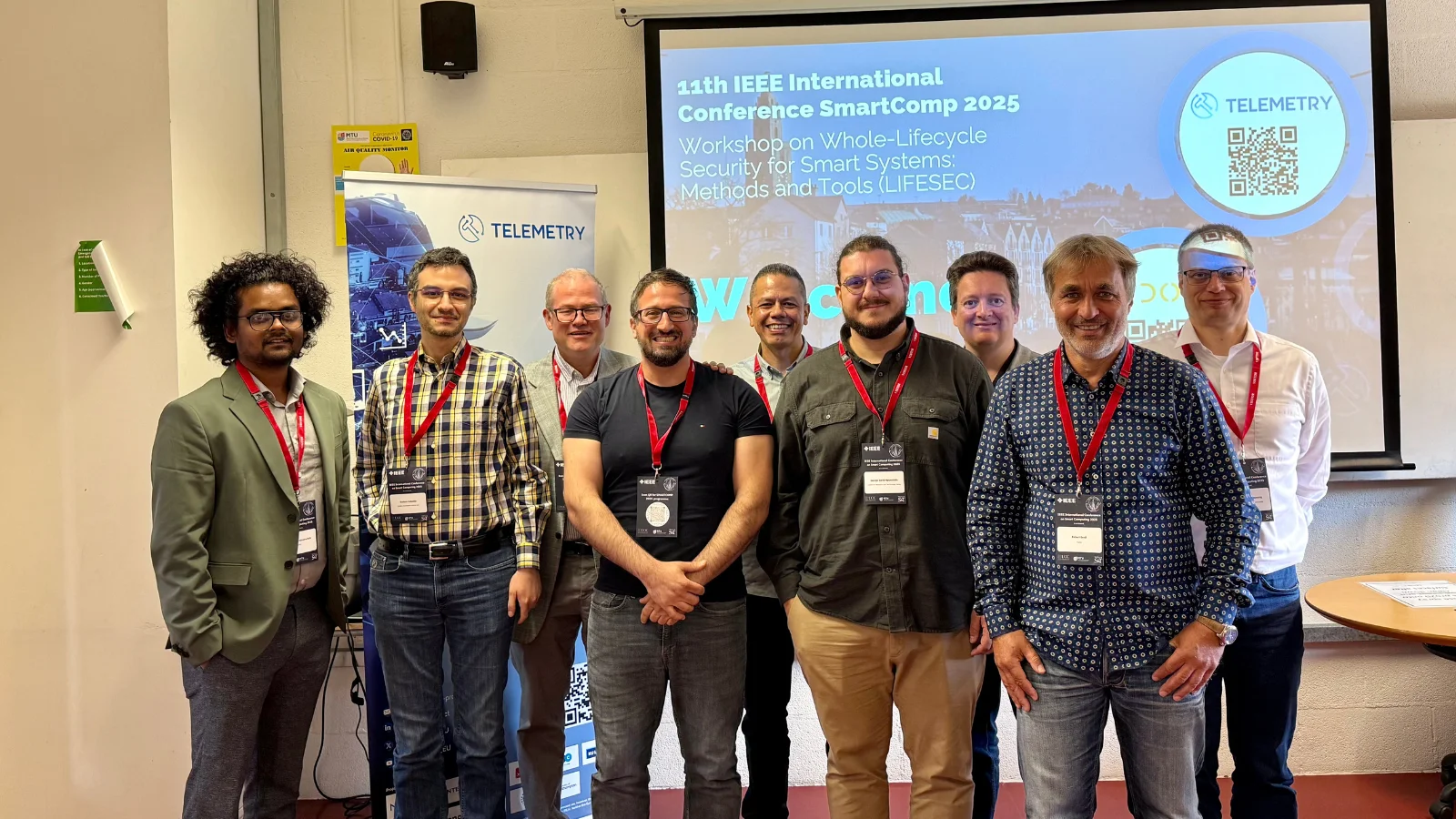
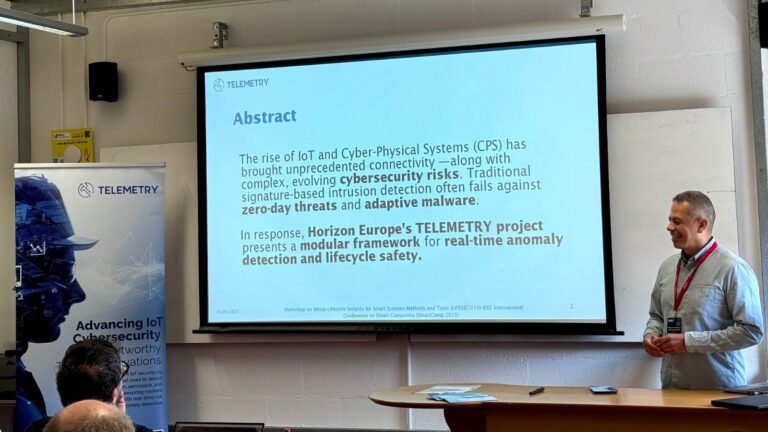
On June 16, 2025, the LIFESEC Workshop took place in Cork, Ireland, as part of IEEE SmartComp 2025. Co-organised by the Horizon Europe projects TELEMETRY and DOSS, the event focused on securing smart systems across their entire lifecycle—from upstream supply chain integration to secure deployment and operation in cyber-physical environments. The LIFESEC Workshop brought together experts in cybersecurity and smart systems security for a focused exchange on whole-lifecycle protection and trust-building in connected environments.
With sessions that explored cutting-edge methodologies, AI-driven tools, and compliance with evolving EU regulations, LIFESEC provided a timely platform for in-depth discussions on how to enhance trust and resilience in an increasingly connected world.
A spotlight on thought leadership
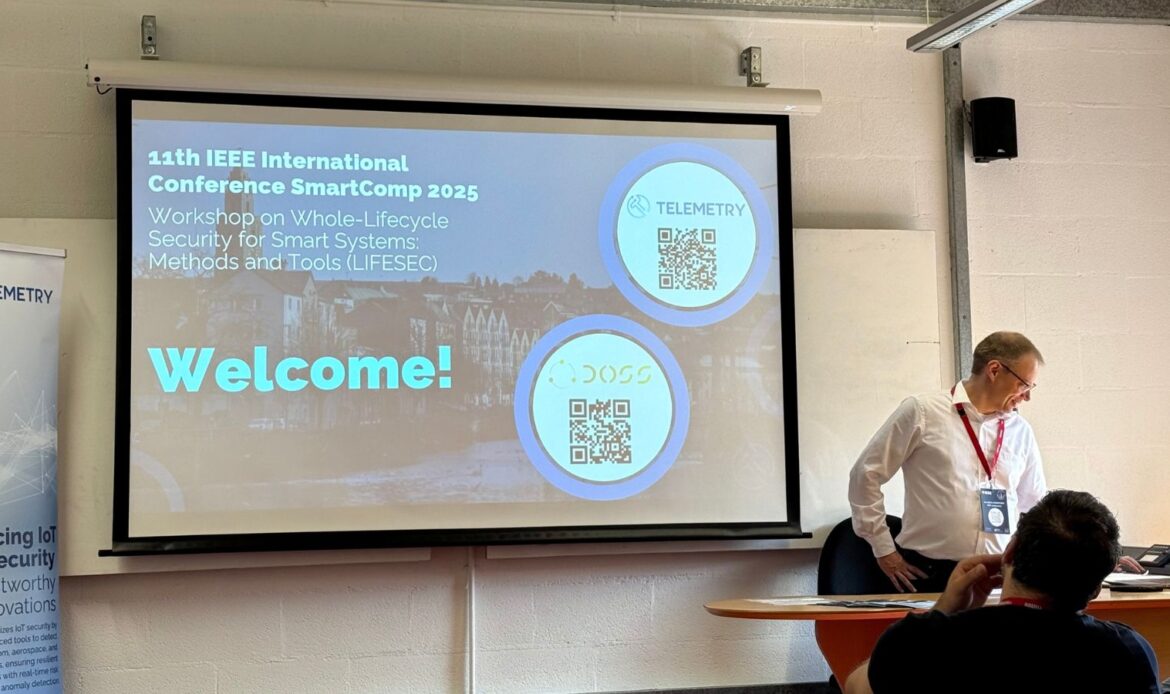
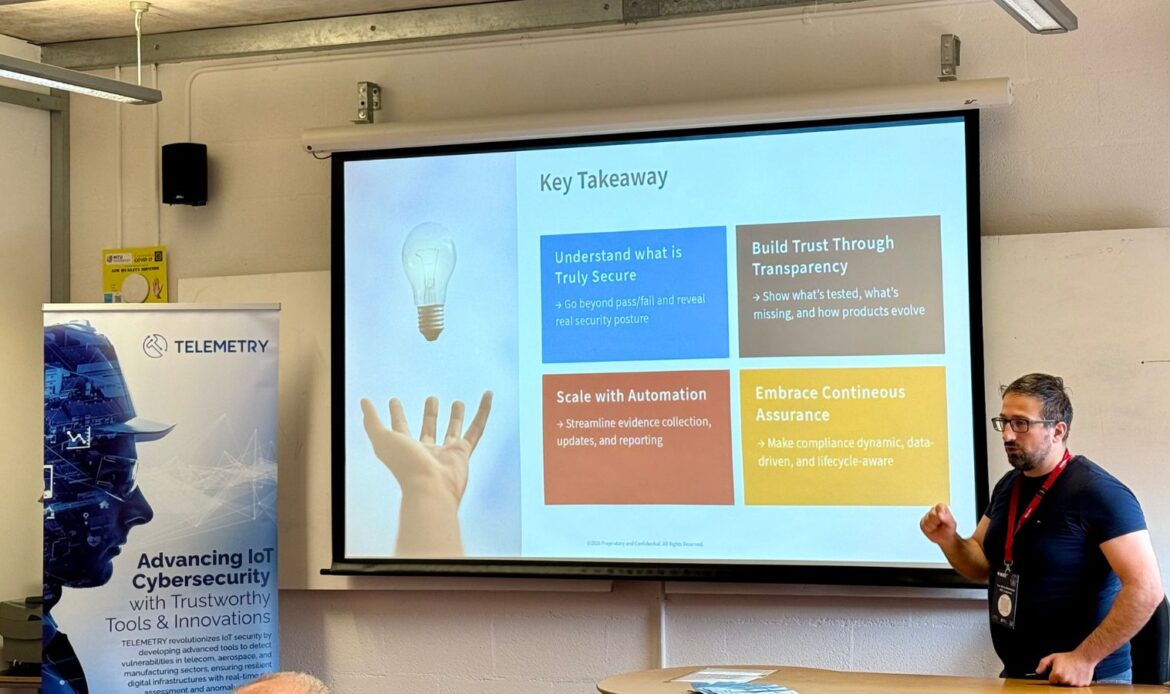
The workshop featured a strong lineup of presentations, beginning with a keynote by Roland Atoui, Managing Director of Red Alert Labs. His keynote, “Rethinking Cybersecurity Compliance: A Scoring and Continuous Monitoring Approach,” highlighted four key principles for evolving cybersecurity assurance frameworks: understanding what is truly secure by going beyond binary pass/fail indicators; building transparency by showing what has been tested, what remains unaddressed, and how systems evolve over time; leveraging automation to streamline evidence collection and reporting; and adopting continuous, lifecycle-aware compliance mechanisms that are dynamic and data-driven.
As he stated, “Cybersecurity compliance needs to evolve from static certification to continuous assurance. By introducing scoring and real-time monitoring, we can build a more transparent, adaptive, and trustworthy ecosystem for connected products.”
Selected speaker insights
Following the keynote, a series of presentations showcased innovative research and practical solutions addressing key challenges in lifecycle cybersecurity—from access control and trust aggregation to anomaly detection and vulnerability analysis. The following quotes were provided by the speakers upon request, offering a concise reflection of their contributions to the workshop.
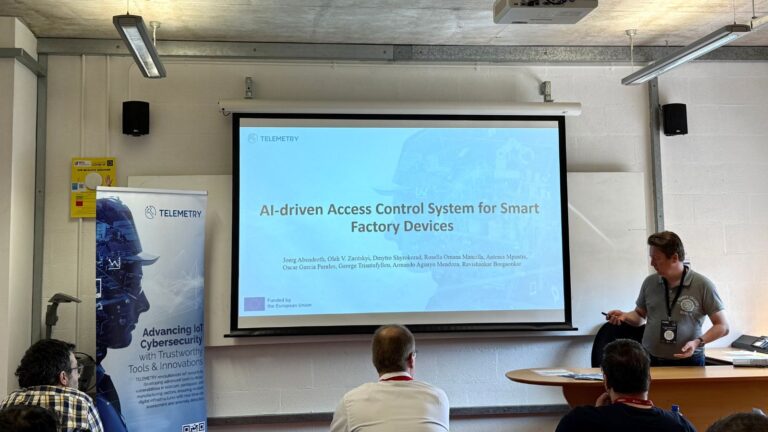
Among the featured presentations, Joerg Abendroth (NOKIA Bell Labs) spoke about the development of an «AI-driven Access Control System for Smart Factory Devices». As he described “The interworking of 19 detection tools enables ACRAM to derive accurate risk and access control decisions. TELEMETRY testing prior to deployment confirmed that the indicators collected from these tools result in a fitting and actionable risk evaluation.”
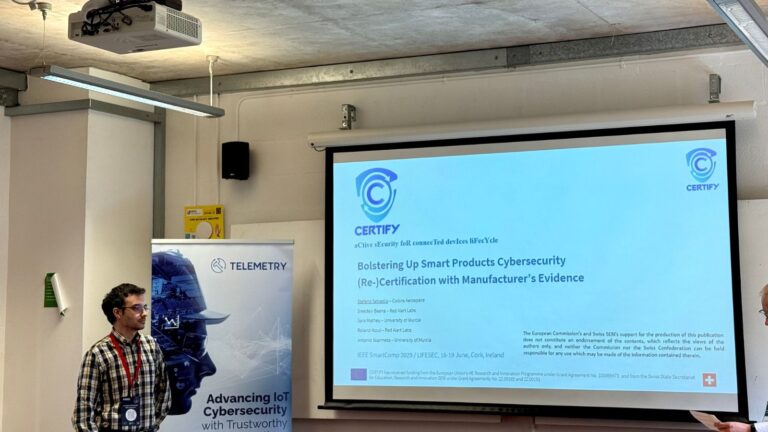
In another session, Stefano Sebastio (Collins Aerospace Ireland) presented «Bolstering Up Smart Products Cybersecurity (Re-)Certification with Manufacturer’s Evidence». He noted “The most recent EU regulations are focusing on smart products with digital elements due to their widespread adoption in everyday life. CERTIFY proposes a methodology to support the continuous re-certification process by means of evidence generated by the manufacturer.”
Armando Aguayo Mendoza (Data Scientist and member of the Data Analytics Group at i4RI) presented «Anomaly Detection Tools for the Lifecycle Security of Smart Systems». He explained “TELEMETRY compounds federated learning, explainable AI, and lightweight monitoring to deliver a scalable and privacy-compliant anomaly detection framework for IoT ecosystems—very high accuracy with minimum resource overhead.”
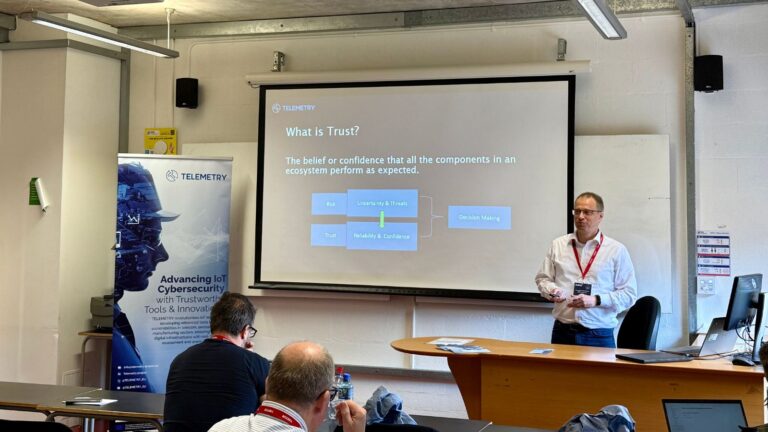
Bernd-Ludwig Wenning (Nimbus Research Center, Munster Technological University) addressed «Machine Learning Based Trust Aggregation for IoT Systems». He pointed out that “The challenge that our LIFESEC contribution addresses is trust aggregation and calculation for IoT systems. Three different AI based methods are compared and assessed in terms of interpretability and accuracy, with the Tsetlin machine approach striking the best balance of accuracy and interpretability on the evaluation data set.”
Finally, George David Apostolidis (Research Associate, Center for Research and Technology Hellas) discussed «AI-Enhanced Static Analysis: Reducing False Alarms Using Large Language Models». He stated “We proposed an approach that enhances traditional static analysis by filtering out false positives using Large Language Model-based vulnerability prediction models. By correlating static analysis alerts with predictions at the function level, we significantly reduced non-actionable alerts while maintaining high recall, thereby improving the practicality of static analysis tools.”

A step forward in lifecycle security
From AI-powered anomaly detection and risk scoring to compliance automation and re-certification frameworks, the LIFESEC Workshop underscored the critical importance of integrated, lifecycle-oriented cybersecurity strategies. The in-depth discussions and innovative methodologies presented throughout the day reflected a shared commitment to strengthening the resilience, transparency, and trustworthiness of smart systems across Europe and beyond.
We extend our sincere appreciation to all speakers, contributors, and participants whose expertise and engagement made LIFESEC 2025 a valuable forum for advancing cybersecurity. Their insights and collaborative spirit contributed meaningfully to a productive and impactful exchange of knowledge.